Napoleon’s sword and Queen Victoria’s tiaras anchor a Paris exhibition of dynastic jewels.
- DAAS2R

- Dec 14, 2025
- 3 min read

A net worth measured in modern figures may define power today, but for centuries, authority was expressed in carats. At the Hôtel de la Marine in Paris, Dynastic Jewels brings together objects that once signaled lineage, legitimacy and inherited influence, tracing how gemstones functioned as instruments of rule as much as adornment.
The exhibition marks the third collaboration between The Al Thani Collection and the Victoria and Albert Museum in London. On view until April 6, it assembles around 50 jewel-filled objects drawn from The Al Thani Collection, the V&A and a small number of public and private lenders, including Cartier, Chaumet, Mellerio and Van Cleef & Arpels.
Among the most emblematic pieces is Napoleon Bonaparte’s sword, commissioned as part of his effort to anchor his reign within France’s royal tradition. Set with the cushion-cut Regent diamond — a 140.64-carat stone from the French Crown Jewels — the sword was worn by Napoleon at his coronation as Emperor. Today, the diamond remains part of France’s national collection and is displayed at the Louvre, while the sword appears here as a reminder of how jewels were used to assert continuity as much as conquest.
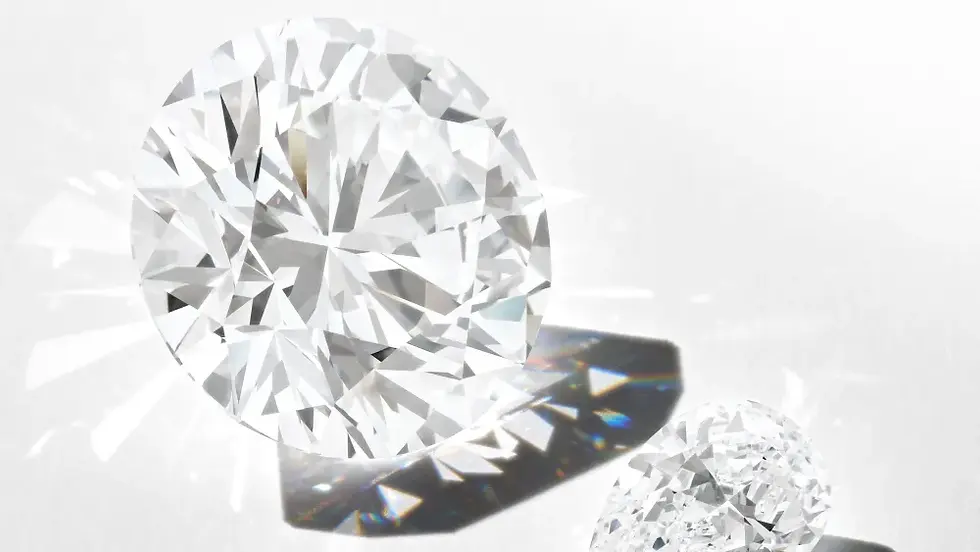
The exhibition opens with a sequence of seven cases dedicated to loose gemstones. Highlights include two engraved Mughal emeralds, a group of 15 amethysts from the Ural Mountains once mounted on a crown for Empress Marie-Louise, Napoleon’s second wife, and the pear-shaped Star of Golconda, a 57.31-carat diamond named after the Indian fort at the center of historic diamond fields.
Curated by Emma Edwards, project curator at the Victoria and Albert Museum, Dynastic Jewels moves from individual stones to courtly display. One gallery is devoted to a group of 19th- and 20th-century tiaras, objects shaped by the aesthetics of their time while reflecting the gradual merging of aristocratic lineage with wealth generated by industrial success.

Another section focuses on dynastic jewels from the courts of the United Kingdom, France and Imperial Russia. Among the standouts are Queen Victoria’s sapphire and diamond coronet and her emerald tiara, both designed by Prince Albert; Napoleon’s jeweled sword; brooches and ornaments intended for the wardrobe of Catherine the Great; and jewels sent by Tsar Alexander I to Frances Vane, Marchioness of Londonderry, during a personal relationship that crossed political lines.
The final gallery addresses the shifts brought by the 20th century, when industrialists and public figures emerged as a new elite, and royal houses increasingly turned to European jewelers as clients. Displayed here are geometric bracelets once owned by American heiress Doris Duke, a Cartier necklace of rubies and diamonds commissioned by Maharaja Digvijaysinhji of Nawanagar, and a replica of the crown created by Van Cleef & Arpels for Empress Farah Pahlavi of Iran in 1967.

Not all of the exhibition’s original selection is currently on view. Three pieces are absent following the October 19 heist at the Louvre, during which nine historic jewels were stolen, including Empress Eugénie’s pearl and diamond diadem, her diamond shoulder brooch, and a pair of pearl and diamond earrings once owned by Joséphine de Beauharnais. According to an Interpol notice, eight of the jewels remain missing, with authorities estimating their value at €88 million and citing the loss to historical heritage as the greater damage.
At the Hôtel de la Marine, Dynastic Jewels presents these objects not simply as ornaments, but as records of power — stones and settings that once spoke for empires, courts and families whose authority was inseparable from what they wore.