From Earth to Art: The Story of the De Beers Jwaneng 28.88 Diamond
- DAAS2R

- Apr 14
- 3 min read
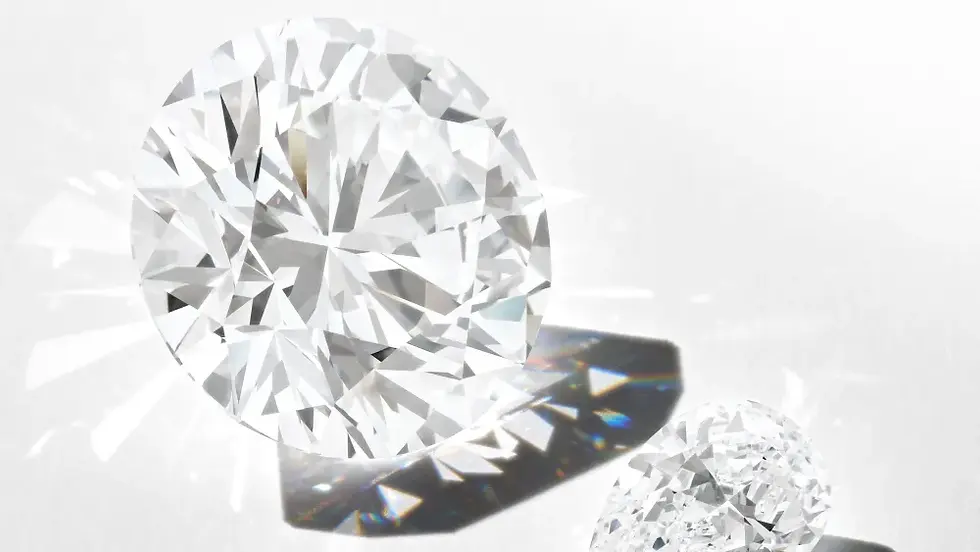
Some diamonds captivate through scale. Others through purity, provenance or historical significance. The De Beers Jwaneng 28.88 commands attention through all of the above, while telling a far larger story: one that begins deep beneath Botswana’s Kalahari landscape and extends into the highest expressions of craftsmanship, responsibility and modern luxury.
Discovered in the legendary Jwaneng Mine, one of the most important diamond sources in the world, the stone emerges from a place that has come to symbolise both natural abundance and exceptional stewardship. Jwaneng, often described as the richest diamond mine in the world by value, occupies a singular position in the industry. It has consistently produced diamonds of remarkable quality, but its significance reaches beyond gemology. In Botswana, diamonds have played a defining role in national development, helping support infrastructure, healthcare and education through a governance model widely regarded as one of the most successful resource partnerships of the modern era.
That context lends deeper meaning to the De Beers Jwaneng 28.88. Through Debswana, the long-standing partnership between De Beers and the Government of Botswana, diamond production has been linked not only to commercial excellence, but to long-term societal impact. It is a reminder that the value of a natural diamond today is increasingly shaped by where it comes from, how it is recovered and the broader system it sustains. Through Building Forever, De Beers continues to articulate this vision, framing rarity not simply as privilege, but as responsibility.
Yet beyond economics and provenance lies the first miracle of the stone itself: its origin in deep geological time. Natural diamonds are among the oldest materials on Earth, formed billions of years ago under immense pressure and heat far below the planet’s surface. Their journey upward is the result of ancient volcanic events, carrying them from the mantle into reach. Every natural diamond is, in this sense, a survivor of deep time, its internal structure preserving a history no human hand could ever replicate.
The De Beers Jwaneng 28.88 began as a 114.83-carat rough diamond, a singular crystal shaped entirely by nature. What followed was a transformation defined by precision, restraint and artistry. The finished stone, a 28.88-carat round brilliant, reveals a rare combination of D colour, flawless clarity and Type IIa purity — a gemological profile that places it among the most exceptional natural diamonds in the world.
In such stones, cutting is not simply a technical process. It is an interpretive act. Every decision must honour the original crystal while unlocking its full optical potential. The result is a diamond whose brilliance feels architectural, a carefully calibrated interplay of light, symmetry and proportion that gives the stone its distinct visual authority. It is not only beautiful; it is exacting.

Its final weight also introduces a compelling symbolic dimension. In Asian collecting traditions, the number eight is closely associated with prosperity, while two is linked to harmony and balance. Together, 28.88 carries an auspicious resonance, adding cultural depth to an already remarkable stone and amplifying its desirability within a global luxury landscape shaped as much by meaning as by rarity.
What makes the De Beers Jwaneng 28.88 so compelling is precisely this convergence of qualities. It is a geological phenomenon, an object of extreme craftsmanship and a diamond with clear, credible provenance. It belongs to that rare category of luxury objects that offer not only beauty, but substance; not only brilliance, but context.
From the depths of Botswana to the refined world of exceptional collecting, the De Beers Jwaneng 28.88 stands as an emblem of what natural diamonds can represent at their highest level: rarity with responsibility, beauty with origin, and value with lasting meaning.


