Jean-Paul Gaultier’s Hermès Era Still Defines the Collector Imagination
- DAAS2R

- Apr 14
- 4 min read
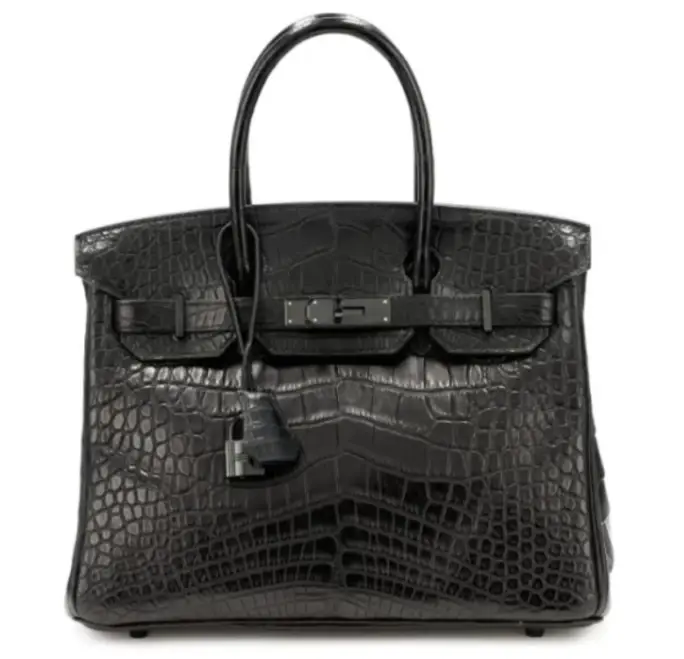
Few designers have left such a distinct imprint on Hermès while remaining, at heart, an outsider to its codes. Jean-Paul Gaultier arrived at the house with an instinct for spectacle, provocation and silhouette, and yet what made his tenure so memorable was not that he disrupted Hermès from the outside. It was that he understood, almost immediately, how to bend its language without breaking its authority.
Long celebrated for the cone bra, for sculptural fragrances and for an irreverence that reshaped late twentieth-century fashion, Gaultier occupies a singular place within the world of Hermès collecting. His years at the house remain especially resonant because they produced something rare: a body of work that felt recognisably Hermès, yet charged with a new kind of sensuality, boldness and runway intelligence.
When Gaultier presented his first Hermès runway collection, the shift was immediate. Where Martin Margiela had approached the house through understatement and intellectual restraint, Gaultier turned toward expression. He did not question Hermès’ commitment to materials and craftsmanship; he assumed it. What interested him was the creative space that certainty allowed. Into that space he brought sharper gesture, stronger attitude and a more explicit sense of image.
Suddenly, Hermès house codes moved differently. Kelly closures appeared on trench coats, the Bolduc ribbon became a graphic line in motion, and equestrian references took on a more charged, fashion-forward edge. Gaultier understood that Hermès did not need embellishment for its own sake. It needed reinterpretation with confidence.
That instinct was perhaps most powerfully expressed through handbags. Unlike his predecessor, Gaultier embraced the runway bag as a central extension of vision rather than a secondary accessory. Under his direction, Hermès introduced styles that would go on to shape the collector landscape for years to come. The Shoulder Birkin, the Kelly Pochette, the Medor clutch, the Lindy, the Kelly Cut, the Kelly Danse and the Jypsiere all speak, in different ways, to his ability to take house archetypes and make them more fluid, more modern and more emotionally legible.
What makes Gaultier’s Hermès bags endure is not only their rarity, but their clarity of intention. He seemed to understand earlier than most that collectors respond not just to craftsmanship, but to character. The Shoulder Birkin, introduced in his first season, captured that principle perfectly. It retained the symbolic authority of the Birkin while loosening its posture, introducing a slouchier, more insouciant silhouette that felt at once practical and seductively offhand. It was Hermès, but with a shrug in its shoulders and a knowingness in its attitude.
That same sensibility ran through his broader contribution to the house. He favoured bags that moved with the body, adapted to contemporary life and suggested an intimacy between wearer and object. The Jypsiere, with its crossbody ease and equestrian undertones, remains one of the clearest examples of this instinct. The Kelly Danse carried similar lightness and versatility, while the Kelly Flat and other more elusive designs revealed just how far he was willing to push proportion and utility without losing the house’s essential poise.
He was equally important in shaping the fantasy of the Hermès runway bag. Alongside leather classics, Gaultier sent out pieces in silk, fur, suede, shagreen, python and embellished variations that blurred the line between handbag and collectible object. Hermès scarves were transformed into bag materials; shearling, studs and unusual treatments appeared not as gimmicks, but as evidence of a house momentarily allowing itself greater theatrical freedom. Some of these designs remained rare runway propositions. Others entered limited production and went on to become collector legends.
This is where Gaultier’s Hermès era becomes especially interesting. It was not merely a period of product creation, but one of imaginative expansion. He demonstrated that Hermès could be precise without being austere, sensual without losing rigor and playful without compromising prestige. He widened the emotional vocabulary of the house.
That legacy helps explain why the recent revival of the Shoulder Birkin has generated such immediate conversation among collectors. Any return to a Gaultier-era design is about more than nostalgia. It signals the continuing power of a period in which Hermès allowed itself a more overt fashion charge while remaining absolutely secure in its craftsmanship. The appeal lies in that balance: heritage sharpened by attitude, iconography reanimated through use.
For collectors, Gaultier’s Hermès remains a touchstone because it sits at the intersection of desirability and authorship. These bags are not valued only because they are scarce or beautiful, but because they belong to a chapter when the house momentarily tilted toward a more expressive mode, and did so without ever ceasing to be itself.
That is why his influence still lingers so strongly. Some of his designs have returned. Others remain elusive, preserved in collector memory and private vaults. But all of them continue to reinforce the same idea: that the most compelling objects in Hermès history are often those that do not simply preserve the house codes, but make them move.
Jean-Paul Gaultier understood that instinctively. And Hermès collectors, perhaps more than anyone, have never forgotten it.


